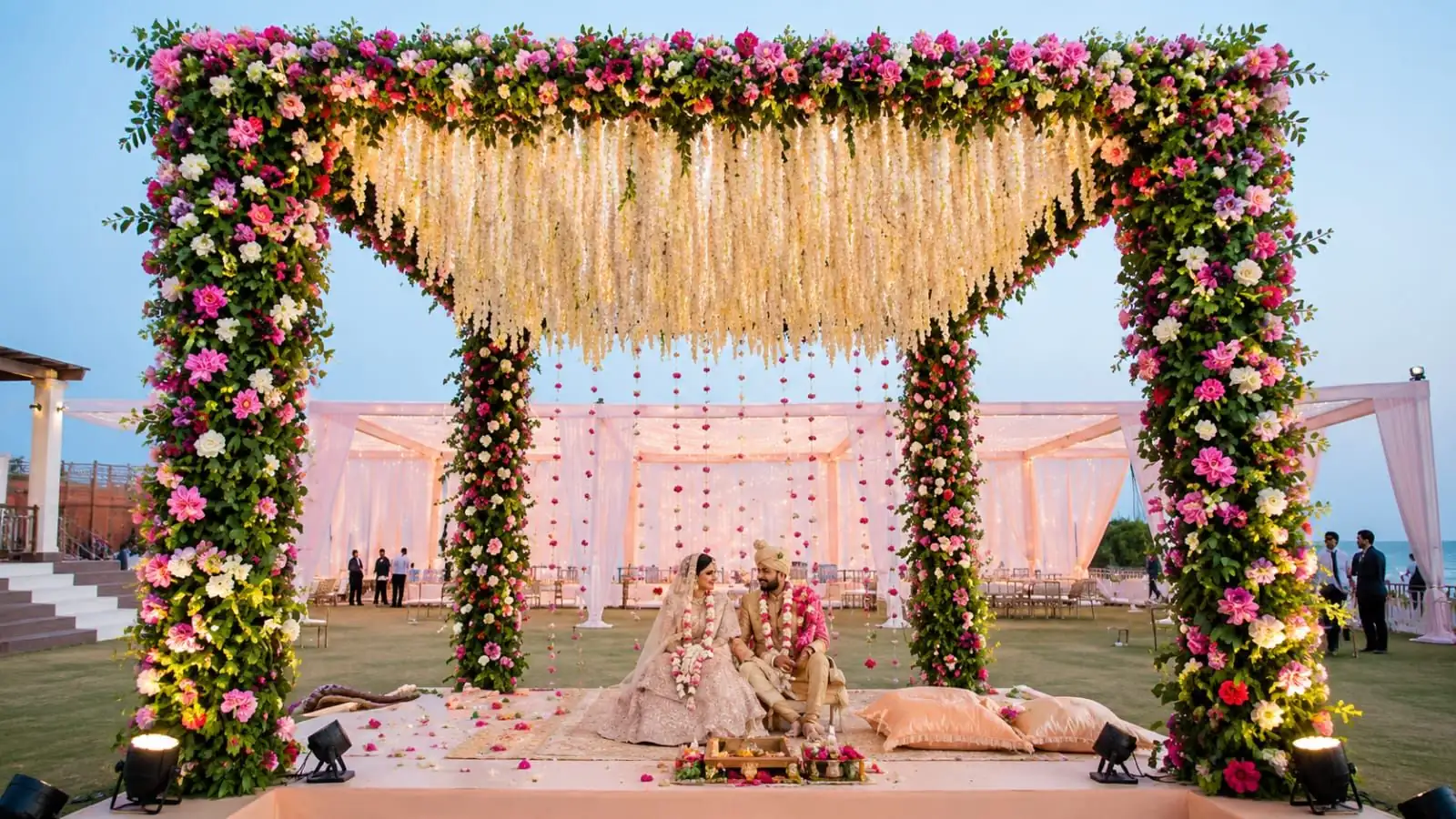
A winter wedding at a farmhouse in Delhi NCR can look beautiful: sunny lawns for the haldi, fairy lights against a clear evening sky and a mandap under the stars. It can also turn into a night of shivering guests, a late baraat stuck in fog and a dinner gone cold. The difference is planning for the weather the way you plan for the décor. This guide covers the December 2026 dates, how cold it really gets, how many heaters to book, when to enclose the venue, how to time each function, a fog plan for guests and what GRAP means for fires and generators.
Quick answer
For a winter wedding at a farmhouse in Delhi NCR, hold day functions on the open lawn and move night functions into an enclosed or side-walled tent. Plan about one patio heater per 8–12 seated guests outdoors, use gas or electric heat instead of wood fires because of GRAP, and ask outstation guests to arrive a day early in case fog delays travel.
Winter Wedding at a Farmhouse in Delhi NCR: At a Glance
| Question | Short answer |
|---|---|
| Season | Late November to February; coldest and foggiest from mid-December to late January |
| December 2026 muhurats | 2, 3, 4, 5, 6, 11 and 12 December (per VedicFeed); confirm with your pandit |
| Night temperature | Can fall to about 3°C on the coldest January mornings |
| Heaters | About 1 patio heater per 8–12 seated guests in the open (estimate); fewer inside an enclosed tent |
| Fires | Avoid wood bonfires and coal angithis under GRAP; use gas or electric heat |
| Fog plan | Outstation guests arrive a day early; stay near the venue; buffer before key rituals |
| Book | Venue now for December; tent, heaters and generator 4–6 weeks before the date |
When Is Winter Wedding Season in Delhi NCR in 2026–27?
The 2026 wedding season opens after Dev Uthani Ekadashi in late November and runs in two blocks. For December, VedicFeed's December 2026 marriage calendar lists muhurats on 2, 3, 4, 5, 6, 11 and 12 December, and none after the 12th. The same source notes that Kharmas usually runs from mid-December to mid-January, a period when most families avoid weddings, so the second block of winter dates follows from late January into February.
- Early December (2–6 Dec): nights are cool rather than biting, fog is less frequent, and the 5 December Saturday muhurat will be one of the most contested farmhouse dates of the season.
- 11–12 December: colder evenings, and the 11 December muhurat runs into the early hours, so plan for a late-night ceremony.
- Late January to February 2027: the coldest, foggiest stretch at its start, easing into pleasant February evenings. Ask your pandit for the exact dates.
Every muhurat date pushes up farmhouse rents, tent rates and caterer prices, so lock the venue first. Our farmhouse wedding cost guide explains how per-plate and flat-rent pricing work on these dates.
How Cold and Foggy Does a Delhi NCR Winter Wedding Get?
Cold enough that an open lawn after 10 PM is uncomfortable for most guests. Afternoons in December and January are usually sunny and pleasant, but temperatures fall quickly after sunset, which comes around 5:30 PM. On 12 January 2026, Safdarjung recorded a minimum of 3.2°C, 4.2 degrees below the seasonal average, according to The Tribune. Farmhouses on the city's edges, such as Chattarpur, Sohna Road, Greater Noida and Alipur, often feel colder than central Delhi because they are open, green and away from buildings.
Fog is the other risk. On 3 January 2025, Scroll reported that 279 departures from Delhi airport were delayed, 17 flights were cancelled and 24 trains ran late because of dense fog. For a wedding, that means late-arriving relatives, slow drives home on expressways and a baraat that may need extra time.
How Do You Keep Guests Warm at an Outdoor Winter Wedding?
No single heater solves it. You get warmth by combining shelter, heat and comfort. Walls and a roof stop the wind that makes a cold night feel colder. Heaters then warm the air inside, and food, drinks and shawls do the rest. Here is how the main options compare.
| Option | Best for | Watch out for |
|---|---|---|
| Gas patio (mushroom) heaters | Open lawns, dinner seating, bar and photo areas | Outdoor use only; keep clear of drapes, florals and kids; check spare cylinders |
| Electric or infrared heaters | Enclosed tents, mandaps, green rooms and covered verandas | Needs a sanctioned load or a GRAP-compliant generator; ask for dedicated circuits |
| Gas fire pits | Lounge seating, after-party corners, sangeet sit-downs | Warm a small circle only; need a stable, non-flammable base |
| Side walls or an enclosed hangar-style tent | Night ceremonies, pheras, dinner for 100+ guests | Adds cost and setup time; plan ventilation and fire exits |
| Indoor hall at the farmhouse | Small weddings and late-night rituals | Check capacity against your real guest count |
| Wood bonfire or coal angithi | Not recommended | Open burning is banned under GRAP; smoke also ruins photos and clothes |
How many heaters do you need for a wedding?
A practical planning rule is one patio heater for every 8–12 seated guests in the open. Inside a side-walled or enclosed tent you can usually work with fewer, because the walls trap the heat. Treat these figures as estimates and ask the tent vendor to mark heater positions on the seating plan.
- 50 guests, open lawn: about 5–6 patio heaters, plus 2 near the bar and buffet.
- 120 guests, open lawn: about 10–15 heaters spread through the seating, not lined up along the edges.
- 250 guests: enclose the dinner and mandap area and use heaters inside, plus a few outside at the entrance, bar and photo points.
- Mandap: 2–4 heaters or electric panels placed so the couple, parents and pandit stay warm through a long ceremony.
Smaller winter gatherings follow the same logic on a smaller scale. Our winter bonfire party guide covers fire pits, heater safety and the open-burning fine in more detail.
Small comforts guests notice
- A basket of shawls or blankets at the entrance and the mandap.
- A hot-drinks counter (masala chai, coffee, kahwa, hot chocolate) open from the moment guests arrive, not only after dinner.
- Soups, tikkas and live counters near the seating so guests are not walking across a cold lawn for food.
- Carpet or flooring over grass, which gets damp with dew.
- Heated rooms for the bride, groom and elderly relatives to rest between functions.
What Is the Best Time for Each Function in a Winter Wedding?
Use the sun for everything you can hold outdoors, and save the enclosed space for the night. A winter farmhouse wedding usually follows a rhythm like this.
| Function | Best winter slot | Setup tip |
|---|---|---|
| Haldi | 11 AM–2 PM, in full sun | Warm water for washing off; heated rooms to change in |
| Mehendi | 12–5 PM on the lawn | Move indoors or under heaters once the sun drops |
| Sangeet | 7–10 PM (outdoor music limit) | Side walls around the stage and dance floor |
| Baraat | Early evening, before fog sets in | Keep the route short and lit; budget extra time |
| Pheras | As per muhurat, often late night | Enclosed or heated mandap; chai counter running |
| Couple photos | 4–5:30 PM, before sunset | Shoot portraits before the evening chill and haze |
The 10 PM limit on outdoor loudspeakers applies to winter weddings too, so the dancing has to wrap up or move indoors at a low volume. Our sangeet night guide has a full run-of-show built around that cut-off.
How Do You Plan for Fog at a Delhi NCR Wedding?
Assume at least one fog delay and build buffers around it. The wedding itself rarely stops for fog, but guest arrivals, the baraat and late drives home all slow down.
- Fly guests in a day early. Morning flights and overnight trains are the most likely to be delayed, so avoid same-day arrivals for anyone in the ceremony.
- House guests close to the venue. A farmhouse with rooms, or a hotel or villa block nearby, cuts late-night driving. See our wedding guest accommodation guide.
- Run a transport desk. One coordinator with a live phone number, arranged cabs and a pickup schedule.
- Light the approach. Ask the venue for lit signage at the turn-off and lights along the drive, since many farmhouse lanes have no streetlights.
- Add buffers. Keep about 30–60 minutes of slack before the muhurat and between functions.
- Keep vendors early. Ask décor, tent and catering teams to finish setup by mid-afternoon rather than racing the fog.
What Do GRAP Rules Mean for a Winter Wedding?
GRAP does not ban weddings. It changes how you heat, power and cook for one. Winter is when air quality is worst, so the Graded Response Action Plan is usually in force through the season, and its stages restrict open burning, coal and wood tandoors and diesel generators that do not meet emission rules.
- Heating: gas or electric heaters, not wood fires or coal angithis.
- Power: electric heaters, lights and sound draw a lot of load. Ask the farmhouse for its sanctioned load, or rent a compliant generator and get that in writing.
- Cooking: ask the caterer to confirm gas or electric tandoors.
- Vehicles: at higher stages, older cars and some vendor trucks face limits, so check guest and vendor vehicles early.
Our GRAP rules guide for weddings and parties explains each stage in detail.
How Much Extra Does Winter Add to a Farmhouse Wedding Budget?
Winter adds a few line items that a spring or monsoon wedding may not need. The figures below are rough planning estimates for a Delhi NCR farmhouse wedding; real quotes vary with guest count, date and vendor.
| Winter item | Rough estimate |
|---|---|
| Patio heaters with gas, per heater per night | Around ₹1,500–₹3,500 |
| Side walls for a dinner or mandap area | Around ₹30,000–₹1,00,000, depending on size |
| Enclosed hangar-style tent for 150–300 guests | Around ₹1,50,000–₹5,00,000+, depending on size and finish |
| Extra generator or power load for heaters | Around ₹15,000–₹60,000 per night |
| Shawl basket, hot-drinks counter and soups | Around ₹15,000–₹75,000 |
Ask whether the farmhouse already includes heaters, side walls or an indoor hall in its rent. That one question can change your budget more than any other winter item.
Winter Farmhouse Wedding Checklist
Questions to ask the farmhouse before you pay
- Is there an indoor hall or covered area, and how many does it seat?
- How many heaters are included, and which type?
- What is the sanctioned power load, and is backup GRAP-compliant?
- Are side walls or enclosed tents allowed on the lawn?
- Do the rooms have heaters and hot water for overnight guests?
- What is the music cut-off, and can the party move indoors?
- Is the approach road lit for fog nights?
Countdown
- 8–12 weeks out: fix the muhurat, book the farmhouse and agree in writing what heating and cover are included.
- 4–6 weeks out: book the tent, side walls, heaters and generator; share the seating plan with heater positions.
- 3 weeks out: lock outstation travel with a day's buffer and book guest rooms near the venue.
- 1 week out: check the GRAP stage, the weather and fog forecast; confirm gas cylinders and spare heaters.
- On the day: heaters on 30 minutes before guests arrive; chai counter open; transport desk live.
How Effortless Events Can Help
Effortless Events is a Delhi NCR event planning and venue discovery company that helps people book farmhouses, villas and venues for weddings, private parties, family celebrations and corporate events. For a winter wedding, we can help you shortlist farmhouses with indoor or covered space, check heating and power before you pay, and coordinate the tent, heaters, caterer and guest stays.