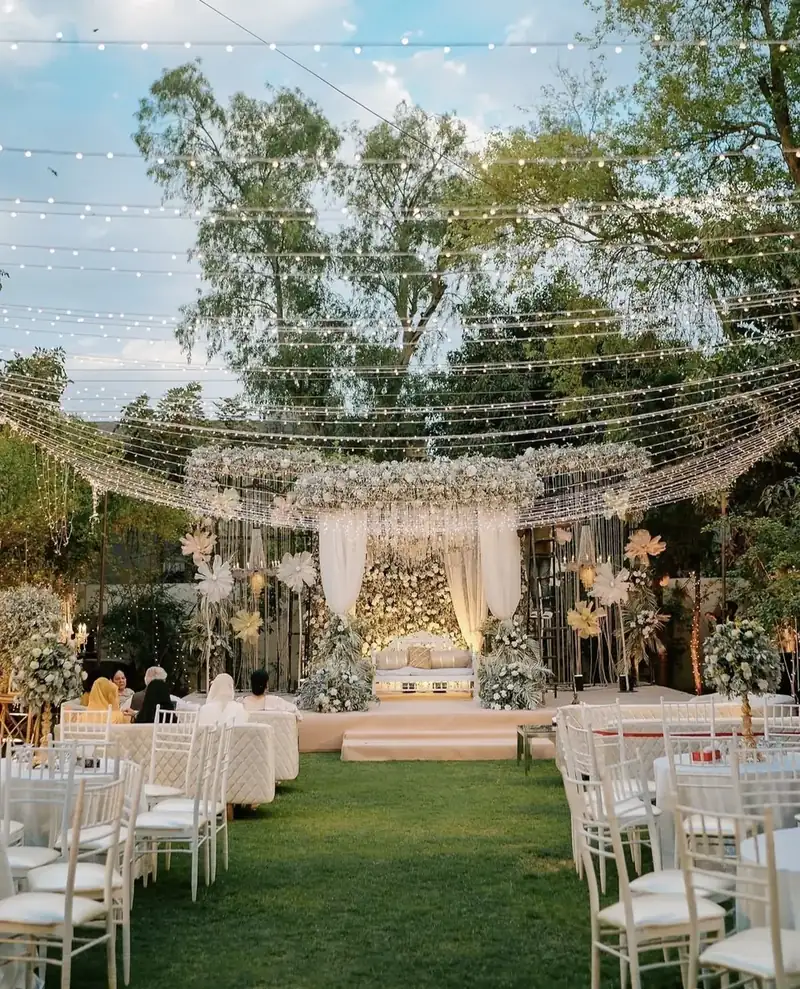
Planning a Christian wedding at a farmhouse in Delhi NCR this winter? The fairy-lit lawn, the white chairs and the cake table are easy to picture. The harder question is whether the vows themselves can be said on that lawn, or whether the service has to stay in church. This guide explains what Indian law and church rules say, why the Lent 2027 date matters, the formats that work, cost estimates and a checklist.
Quick answer
Most Christian couples in Delhi NCR say their vows in church and celebrate at a farmhouse. Indian law allows a marriage in a church, a private dwelling or before a registrar, generally between 6 AM and 7 PM, but Catholic and Anglican rules normally require a church. Aim to marry before Lent begins on 10 February 2027.
Christian Wedding at a Farmhouse: At a Glance
| Item | What to plan for |
|---|---|
| Ceremony venue | Usually your parish church; an outside venue only with your church's permission |
| Ceremony hours | Generally 6 AM–7 PM (Section 10, Indian Christian Marriage Act, 1872) |
| Farmhouse functions | Reception, wedding lunch, rehearsal dinner, bridal shower, bachelor or cocktail night |
| Season window | December 2026 to early February 2027; Lent runs 10 Feb–28 Mar 2027 |
| Lead time with the parish | At least 3 months for documents, course and banns (typical Catholic practice) |
| Cost (estimate) | About ₹5.5–14 lakh for a church service plus a 150-guest farmhouse reception, before bar |
Can a Christian Wedding Be Held at a Farmhouse?
Legally it can be possible, but your church usually decides. The Indian Christian Marriage Act, 1872 governs how Christian marriages are solemnised in most of India, including Delhi, Haryana and UP. The church you belong to then adds its own rules on top, and those are what most couples run into first.
What does the Indian Christian Marriage Act say?
According to this Nyaaya legal explainer, a Christian marriage can take place in a church, in a private dwelling or in the presence of a marriage registrar, and generally between 6 AM and 7 PM. Church of England clergy must marry couples in a church unless there is no church within five miles or the bishop has granted a special licence. The Wikipedia summary of the Act adds that it must be performed by an authorised person, such as an ordained minister or a marriage registrar, with two witnesses, and that the certificate is recorded with the government registrar.
Can a Catholic wedding be held outside a church?
Usually not. A May 2026 piece from Catholic Connect explains that the Church strongly prefers marriage in a church, ideally within Mass, because it is a sacrament. Diocesan authority can permit another place in some pastoral or interfaith situations, but the priest or deacon, two witnesses and formal permission are still required. In practice, Catholic couples in Delhi NCR marry in their parish church and book the farmhouse for everything after.
What about Protestant and other churches?
Rules differ by denomination and by congregation. Some pastors will conduct a service at a private venue; others will not. Ask your own pastor before you pay a farmhouse advance for the ceremony, and get the answer in writing if the vows will be on the lawn.
This section is general information, not legal advice. Kerala couples should note that the Act does not apply in some areas that were part of Travancore-Cochin, and interfaith couples may also look at civil marriage under the Special Marriage Act.
When Should You Plan a Christian Wedding in Delhi NCR?
The best window this season is December 2026 to early February 2027. Delhi winters suit an afternoon church service followed by a lawn reception, and Lent, which many parishes treat as a quiet season for weddings, begins on Ash Wednesday, 10 February 2027, with Easter on 28 March 2027.
- Early to mid December: good weather for an evening lawn reception with heaters; Advent is under way, so ask how your parish handles flowers and music.
- Christmas to New Year: popular with families flying home, but churches are busy with Christmas services and many farmhouses price New Year's Eve as a premium night.
- January: coldest and foggiest month; prefer a daytime lunch reception and plan for flight delays.
- Up to 9 February 2027: last weekend before Lent is Saturday 6 February.
- After Easter (from April 2027): possible, but the heat pushes receptions late into the evening.
For cold-weather planning, see our guide to a winter wedding at a farmhouse.
How Do Couples Combine a Church Service and a Farmhouse?
The usual answer is: vows in church, celebration at the farmhouse. Effortless Events is a Delhi NCR event planning and venue discovery company that helps couples book farmhouses, villas and venues for the receptions, lunches and pre-wedding events around a church wedding. These four formats cover most Christian weddings.
| Format | How the day runs | Best for |
|---|---|---|
| Morning church + farmhouse lunch | Service around 11 AM; lunch reception 1:30–5 PM in winter sun | Elders, families with children, January dates |
| Afternoon church + evening reception | Service around 3–4 PM; reception 7–10 PM with first dance and cake | Classic "white wedding"; 100–300 guests |
| Ceremony at the farmhouse | Vows on the lawn before 7 PM, then reception on site | Only where your church or minister has agreed in writing |
| Church, then reception later | Small church wedding first; farmhouse reception days or weeks later | Large guest lists, interfaith families, NRI schedules |
What Does a Church-to-Farmhouse Wedding Day Look Like?
Here is a sample plan for an afternoon service and evening reception. Timings are a guide only; your parish will tell you when the church is free and how long the service runs.
- 1:00–2:30 PM: bride and groom get ready; flowers and cake delivered to the farmhouse.
- 3:00–4:15 PM: church service: processional, Bible readings, sermon, vows, rings, signing of the register with two witnesses.
- 4:15–5:00 PM: confetti exit and family photographs outside the church.
- 5:00–6:30 PM: travel to the farmhouse; couple shoot on the lawn at golden hour (sunset is around 5:25–5:35 PM in December).
- 7:00–8:00 PM: grand entry, toast, cake cutting and first dance.
- 8:00–10:00 PM: dinner and dancing, with amplified music wound down by 10 PM.
- 10:00–11:00 PM: send-off; guest cars and cabs leave in batches.
Keep the farmhouse within about 30–60 minutes of the church (estimate). A South Delhi parish pairs naturally with Chattarpur or Westend Greens; Gurgaon churches with Sohna Road or Gwal Pahari; Noida churches with the Expressway farm belt; and West Delhi with Bijwasan or Kapashera.
How Much Does a Christian Wedding with a Farmhouse Reception Cost?
As a rough 2026 estimate, a church service plus a 150-guest farmhouse reception in Delhi NCR often totals about ₹5.5–14 lakh, before a bar, the gown, suits and rings. The church side is usually small: a fee or offering, the choir or organist and church flowers, which vary by parish. The figures below are planning estimates, not quotes.
| Item (estimate) | 60 guests | 150 guests | 300 guests |
|---|---|---|---|
| Church offering, choir or organist, church flowers | ₹0.15–0.6 lakh | ₹0.25–0.8 lakh | ₹0.3–1 lakh |
| Farmhouse venue and food (₹1,500–₹3,000 per plate) | ₹0.9–1.8 lakh | ₹2.25–4.5 lakh | ₹4.5–9 lakh |
| Décor: aisle, stage, fairy lights, table flowers | ₹0.5–1.5 lakh | ₹1.25–3.5 lakh | ₹2.5–7 lakh |
| Tiered wedding cake | ₹0.1–0.3 lakh | ₹0.2–0.6 lakh | ₹0.35–1 lakh |
| Live band, DJ and sound | ₹0.3–0.8 lakh | ₹0.5–1.5 lakh | ₹0.75–2 lakh |
| Photo and video (church + reception) | ₹0.5–1.25 lakh | ₹0.75–2 lakh | ₹1.25–3 lakh |
| Cars, heaters, power backup and on-ground team | ₹0.2–0.5 lakh | ₹0.3–0.8 lakh | ₹0.6–1.5 lakh |
| Total (before bar) | About ₹2.5–7 lakh | About ₹5.5–14 lakh | About ₹10–24 lakh |
Peak December Saturdays, premium caterers and large stage builds push totals higher. A bar, a rehearsal dinner or a second-day lunch are extra. For a full breakdown of reception costs, see our wedding reception at a farmhouse guide.
What Makes a Christian Wedding Reception Different?
A Christian reception runs on a few set moments, and the farmhouse layout needs to suit each one. Brief the venue and your caterer on these before the day.
- Grand entry and aisle: a clear central path from the gate to the stage, lit for photographs.
- Toast: wine or a non-alcoholic sparkling drink for every table, poured before speeches begin.
- Cake cutting: a stable table on level ground, shaded from heaters so the icing holds.
- First dance: a dance floor or flat deck, not uneven grass, plus a band or DJ who knows the order of events.
- Bouquet and garter toss: optional, but leave open space near the stage.
- Menu: many families mix a continental or Goan, Kerala or Anglo-Indian spread with North Indian dishes; confirm whether outside caterers are allowed.
Do you need a licence for wine and a bar?
Yes, in most cases. In Delhi a farmhouse event that serves alcohol needs a P-10 licence; Haryana and UP farmhouses need their own state permits. Our alcohol quantity guide helps you size the toast wine and the bar.
What Should You Check Before Booking the Farmhouse?
- Arrival time on the day: guests may come straight from a 4 PM church service, so the venue must be ready by 5 PM.
- If the vows will be on site: written approval from your minister, a quiet ceremony area, a table for signing the register and a finish before 7 PM.
- A warm, well-lit dressing room for the bride and a second room for the groom.
- Covered or tented seating, patio heaters and power backup for December and January evenings (check current GRAP limits on diesel generators).
- A level dance floor and a stable cake table.
- Music cut-off: amplified sound outdoors generally has to stop by 10 PM.
- Firecrackers and sparklers: none. Plan a confetti or bubble send-off instead.
- Parking for guest cars and a drop-off point close to the lawn for elders.
What Paperwork Do You Need for a Church Wedding?
Start with your parish at least three months before the date. Requirements vary by church and diocese, but a Catholic parish will typically ask for the following, going by published parish guidance such as this Mumbai parish's marriage page:
- A recent baptism certificate (often dated within six months).
- A marriage preparation course certificate.
- A pre-nuptial enquiry form, filed with your priest.
- Banns read on two consecutive Sundays in both parishes, with the result returned to the parish where you marry.
- For a mixed or interfaith marriage, extra documents such as proof of birth and an affidavit from the non-Catholic partner.
Confirm the Delhi, Gurgaon or Noida process with your own parish, as rules differ. After the service, collect the marriage certificate and keep copies for passports, visas and bank records. Couples who are not marrying in church can compare other routes in our intimate farmhouse wedding guide.
Christian Wedding Checklist: Church and Farmhouse
- 12+ weeks out: meet your priest or pastor; fix the date and time; book the marriage preparation course.
- 10–12 weeks out: shortlist farmhouses within 30–60 minutes of the church; visit at the time of day you will use them.
- 8–10 weeks out: book caterer, baker, décor, photographer and band; order the gown and suits.
- 6–8 weeks out: submit parish documents; banns are read; choose readings and hymns with the choir.
- 4–6 weeks out: apply for a liquor licence if there is a bar; confirm heaters, power plan and the 10 PM cut-off in writing.
- 1–2 weeks out: rehearsal at the church; final headcount; run-of-show to every vendor; fog plan for outstation guests.
- Day after: collect the marriage certificate and settle vendor balances.
Effortless Events can shortlist farmhouses near your church and plan the reception around the service time, so you can focus on the vows.