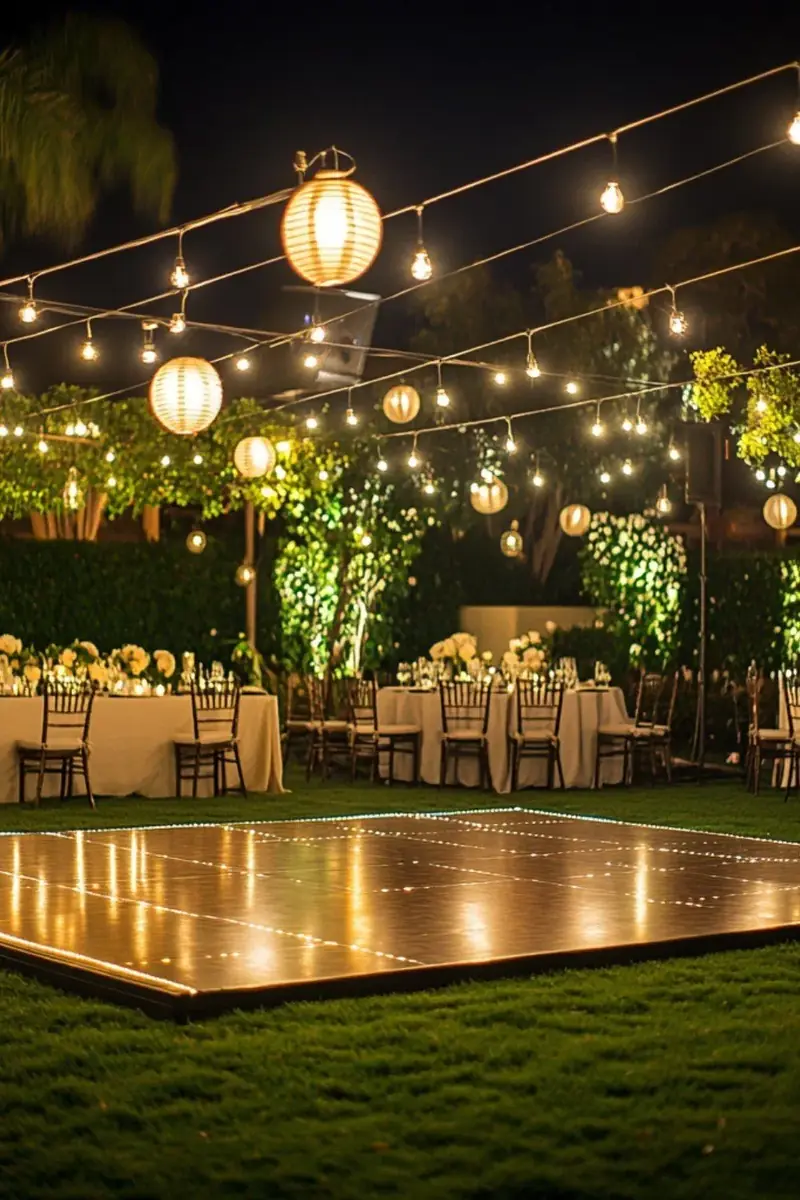
A jaggo ceremony at a farmhouse in Delhi NCR keeps the loudest, happiest night of a Punjabi wedding intact at a time when most families live in apartments and gated societies where a midnight procession with a dhol and a lit pot is no longer possible. A farmhouse gives you a long driveway and lawn for the procession, no neighbours a few feet away and room for the whole maternal side. This guide covers what happens at a jaggo, when to hold it for a December 2026 or January–February 2027 wedding, how it differs from a sangeet, the items list, cost estimates, the 10 PM and fire rules, and a checklist.
Quick answer
Hold the jaggo on the night before the wedding, starting around 7–8 PM, and book the farmhouse 3–6 weeks ahead for December 2026 dates. Plan a lit-pot procession around the lawn with a dhol, boliyan and gidda, a Punjabi dinner, and finish outdoor dhol and speakers by 10 PM. Budget roughly ₹2.5–8 lakh (estimate) for 80–150 guests.
Jaggo at a Farmhouse: At a Glance
| Decision | What works for most Delhi NCR families |
|---|---|
| When | Night before the wedding (sometimes 1–2 nights earlier), after the mehendi or maiyan |
| Timing | Guests 7 PM, procession 8–9 PM, dinner and bhangra to 10 PM outdoors |
| Guest count | 50–150; mostly family, with the maternal side leading |
| Formats | Standalone jaggo, mehendi + jaggo, or jaggo procession opening the sangeet |
| Must-haves | Decorated pot with diyas, bell stick, chhaj, dhol, a route around the lawn |
| Budget (estimate) | About ₹2.5–8 lakh all-in for 80–150 guests |
| When to book | 3–6 weeks ahead for December 2026; 6–10 weeks for February 2027 weekends |
All budget figures in this guide are rough estimates based on typical Delhi NCR quotes unless a source is linked. Rates change with the date, area, guest count and vendors.
What Happens at a Jaggo Ceremony?
A jaggo is a Punjabi pre-wedding night in which the family carries a decorated pot lit with diyas, sings boliyan and dances gidda and bhangra to a dhol. The word comes from jaagna, to stay awake — in villages the procession went from house to house late at night, waking neighbours to announce the wedding and inviting them to join. Explainers such as this January 2026 jaggo guide and this Sikh-wedding overview describe the same core elements:
- The jaggo pot: a clay or brass pot (gagar or ghadoli) decorated with flowers, mirrors or gota, with diyas lit on top. The maami traditionally carries it on her head.
- The bell stick and chhaj: a decorated stick with ghungroos and a winnowing tray beaten for rhythm.
- Boliyan: short call-and-response folk couplets, many of them teasing the other family, led by the women of the house.
- Gidda and bhangra: unrehearsed group dancing to the dhol, often ending in a friendly contest between the two sides.
- Blessings: the procession ends with elders blessing the bride or groom.
The bride's and groom's families usually hold their own jaggo separately. There is no stage and no choreography; the energy comes from the family, the dhol and the procession.
Why Hold a Jaggo at a Farmhouse Instead of at Home?
A farmhouse gives the jaggo the one thing a city home can't: a long, private route for the procession, away from neighbours, traffic and society rules. The old village walk becomes a loop down the driveway, around the lawn and back to the main seating area.
| Factor | Farmhouse | Home or society | Banquet hall |
|---|---|---|---|
| Procession route | Driveway and lawn loop | Lanes or society roads; complaints likely | Indoor circle only |
| Dhol and noise | Fewer neighbours; 10 PM still applies | RWA rules, close neighbours | Hall's own cut-off |
| Diyas and open flame | Outdoors, away from fabric | Tight corridors and lifts | Often restricted indoors |
| Stay-over for family | Possible if it has rooms | Limited | Hotel rooms extra |
| Cost | Evening rent + vendors | Lowest | Per-plate minimum |
If the same farmhouse hosts your day functions, combining them saves a venue fee — see our guide to haldi and mehendi at a farmhouse for the daytime half of the plan. If the family also holds a devotional evening before the wedding, see our guide to a mata ki chowki at a farmhouse.
When Should You Hold the Jaggo for a 2026–27 Wedding?
Hold the jaggo on the night before the wedding, and work the date back from your wedding day. For Hindu Punjabi weddings that follow a panchang, VedicFeed's December 2026 calendar lists vivah muhurats on 2–6, 11 and 12 December, and its January 2027 list restarts on 15 January, with more dates in February 2027. The gap is Kharmas, which Hindupad places from 16 December 2026 to 14 January 2027. Many Sikh families fix the Anand Karaj by family and gurdwara convenience rather than a muhurat, so their jaggo nights can fall in late December too.
| Wedding date | Likely jaggo night | What to watch |
|---|---|---|
| 2–6 Dec 2026 | 1–5 Dec | Only 2–3 weeks away; farmhouses and dhol players busy |
| 11–12 Dec 2026 | 10–11 Dec (Thu–Fri) | Friday nights in high demand; fog late |
| Late Dec 2026 (non-muhurat Anand Karaj) | Night before | Competes with Christmas and New Year's Eve parties |
| 15 Jan – Feb 2027 | Night before each date | Coldest nights; heaters and covered seating essential |
Muhurat lists differ by panchang and community. Confirm the wedding date with your family priest or gurdwara before booking.
Jaggo vs Sangeet: What Is the Difference?
A jaggo is a ritual-led family procession; a sangeet is a performance night with a stage. That difference changes the venue set-up, the vendors and the budget, so decide early whether you are holding one, the other or both.
| Factor | Jaggo | Sangeet |
|---|---|---|
| Core idea | Lit-pot procession, boliyan, gidda | Rehearsed dances and performances |
| Who leads | Maternal family (mama–maami) | Couple, cousins, friends, anchor |
| Set-up | Open lawn route, low seating, diyas | Stage, dance floor, LED screen |
| Music | Live dhol, family singing | DJ and sound system |
| Cost | Lower — few vendors | Higher — stage, sound, choreographer |
Three formats work well at a Delhi NCR farmhouse: a standalone jaggo on the night before the wedding; a mehendi + jaggo day where the mehendi runs in the afternoon and the jaggo starts at sunset; or a jaggo-opens-sangeet evening, where a 30–40 minute procession leads guests to the stage. For the stage half of that last format, see our sangeet night at a farmhouse guide.
What Items Do You Need for a Jaggo Night?
You need the jaggo pot, lighting for it, rhythm props, a dhol player and a few comfort items for a winter night outdoors. Use this list with your décorator or family:
- Decorated jaggo pot (gagar or ghadoli), plus one spare
- Clay diyas, mustard oil, cotton wicks, a lighter and a wind guard
- Battery LED diyas or an LED pot as a backup for wind or rules
- Decorated stick with bells or ghungroos; a chhaj for rhythm
- Phulkari dupattas, paranda tassels and props for photos
- Printed boliyan sheets for younger cousins
- Dhol player (two for 100+ guests), plus a small sound system for dinner
- Low seating, gaddas or charpais for elders along the route
- Patio heaters, shawls and hot drinks for December–February
- Fire extinguisher and sand bucket near the procession route
Décor stays simple: string lights and lanterns along the route, marigold strings and brass urlis with floating diyas at the seating area. For more ideas that don't blow the budget, see farmhouse party decoration ideas on a budget.
How Much Does a Jaggo Night at a Farmhouse Cost in Delhi NCR?
As a rough estimate, a jaggo for 80–150 guests at a Delhi NCR farmhouse often totals about ₹2.5 lakh to ₹8 lakh. Food and evening rent are the two biggest lines; the dhol, props and simple décor cost far less than a sangeet's stage-and-sound package. For dhol, Delhi listings show a wide spread — one Punjabi dhol listing on WeddingBazaar shows a starting price of ₹11,000 for a 3-hour performance, while a South Delhi dhol vendor on WeddingWire lists prices from ₹2,100 per event (both checked November 2026). Confirm hours, number of players and travel in writing.
| Cost line | Typical estimate (80–150 guests) |
|---|---|
| Farmhouse rent (evening) | ₹75,000 – ₹3,00,000 |
| Punjabi dinner (per plate) | ₹900 – ₹2,500 per guest |
| Dhol (1–2 players) | From a few thousand to ₹25,000+ (listed prices above) |
| Jaggo pot, stick, diyas and props | ₹2,000 – ₹10,000 |
| Lights, lanterns and simple décor | ₹30,000 – ₹1,50,000 |
| Heaters and covered seating | ₹15,000 – ₹75,000 |
| Photographer / videographer | ₹20,000 – ₹75,000 for the evening |
Sample budget: 100-guest jaggo (estimate)
- Evening rent: ₹1,50,000
- Dinner at ₹1,400 × 100: ₹1,40,000
- Two dhol players: ₹20,000
- Props and diyas: ₹6,000
- Lights and décor: ₹60,000
- Heaters: ₹30,000
- Photography: ₹40,000
- Total: about ₹4.5 lakh, before any bar costs
If you serve liquor, add bar staff and the permit: in Delhi, an Excise notice of 22 October 2026 requires a P-10 permit at ₹15,000 per farmhouse event — our cocktail party at a farmhouse guide explains it, along with Haryana and UP permits for Gurgaon and Noida farmhouses.
Can a Jaggo Go On After 10 PM in Delhi NCR?
Not outdoors with loudspeakers, as a rule. Noise rules bar loudspeakers and public-address systems in open areas between 10 PM and 6 AM unless the authorities permit it, and in April 2025 Delhi Police made prior permission mandatory for loudspeaker use. A live dhol on an open lawn carries far, and police in Gurgaon, Noida and Faridabad respond to late-night complaints too. The tradition is a late night, so plan the loud part early:
- Start the procession by 8–8:30 PM, not after dinner.
- Finish outdoor dhol and speakers by 10 PM.
- Move boliyan and gidda indoors afterwards with doors closed and no amplification.
- Get the farmhouse's own music cut-off in writing.
Diyas, fireworks and winter air rules
Lit diyas on a pot carried through a crowd need care: keep the route clear of drapes, tent walls and hay bales, have one adult walk beside the pot-bearer, and keep an extinguisher nearby. Fireworks are off the table — the Supreme Court restored the firecracker ban in Delhi-NCR from 9 November 2026, with no exception for weddings. During bad-air spells, GRAP curbs can also restrict diesel generators and open fires, so confirm the farmhouse's power backup and heater plan; our GRAP rules guide covers each stage.
What Is a Good Run-of-Show for a Farmhouse Jaggo?
A good farmhouse jaggo runs about three hours: arrivals and snacks, the lit-pot procession, then dinner and bhangra before 10 PM. This sample plan fits a December evening:
| Time | What happens |
|---|---|
| 4:00–6:30 PM | Lights, heaters and seating set; route walked and cleared; pot decorated |
| 7:00–8:00 PM | Guests arrive; chai, pakoras and tikkis; maiyan or blessings if not done earlier |
| 8:00–8:45 PM | Diyas lit; maami lifts the jaggo; procession with dhol and boliyan around the lawn |
| 8:45–9:15 PM | Gidda and bhangra circle; bride's vs groom's side boliyan face-off if shared |
| 9:15–10:00 PM | Dinner; dhol wraps up by 10 PM |
| After 10:00 PM | Indoor singing, unamplified; early night before the wedding |
Jaggo night ideas that work at a farmhouse
- A lantern-lined driveway as the procession route, ending at a marigold-framed seating area.
- A "pind" corner with charpais, a chulha-style live counter (if fires are allowed that day) and makki-sarson.
- Boliyan cards with each family's best teasing verse for the face-off.
- Pass the pot: every aunt and cousin takes a short turn carrying the jaggo for photos.
- A slow-shutter photo moment of the lit pot moving in the dark — brief your photographer in advance.
Jaggo at a Farmhouse: Booking Checklist
Questions to ask the farmhouse owner
- Are lit diyas and a live dhol allowed? Until what time?
- Is there a clear loop for a procession — driveway, lawn, paths?
- Can we bring our own caterer, dhol and décorator?
- What power backup is available if generators are restricted?
- Are there rooms for the bride or groom and elders to stay?
- Is the venue also free for the mehendi or wedding next day?
- What are the deposit, cleaning and cancellation terms?
Countdown
- 4–6 weeks before: fix the jaggo night, book the farmhouse and dhol, decide the format.
- 2–3 weeks before: order or decorate the pot and stick, finalise menu, heaters and lights.
- 1 week before: share the run-of-show; print boliyan sheets; confirm the 10 PM plan in writing.
- On the day: walk the route in daylight, test the diyas and LED backup, place the extinguisher.
How Effortless Events Helps With a Jaggo Night
Effortless Events is a Delhi NCR event planning and venue discovery company that helps families book farmhouses, villas and venues for weddings, pre-wedding functions, private parties and corporate events. For a jaggo, that means shortlisting farmhouses with a good procession route and rooms for family, checking music, flame and power rules upfront, and lining up the dhol, caterer and lights so the night runs on time.
Final Thoughts
The jaggo is the night the whole family remembers singing together, and a farmhouse gives it back the procession that city homes have lost. Fix the night from your wedding date, start the procession early to respect the 10 PM limit, keep the diyas safe, and book now if your wedding falls in early December.