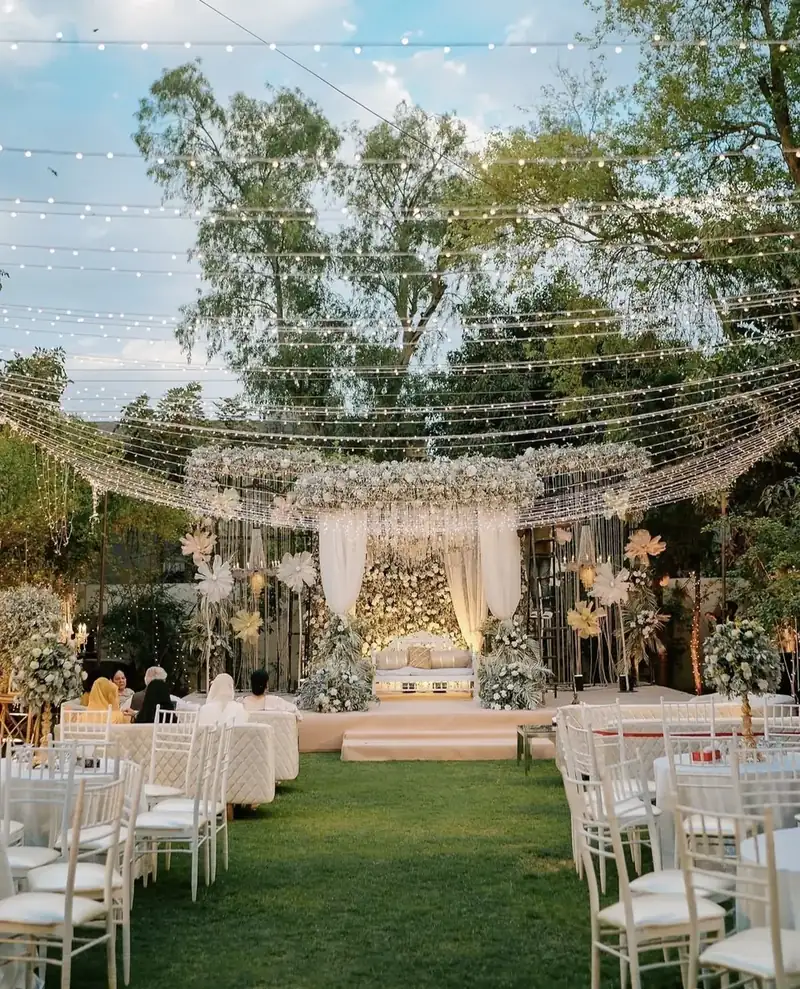
A mata ki chowki at a farmhouse in Delhi NCR suits families whose guest list has outgrown the living room, who live in a society where bhajans on speakers draw complaints, or who want the chowki, the langar and the parking in one place. This guide explains how a chowki differs from a jagran, which slot to pick in winter, what Delhi NCR mandalis list as prices, what the whole event costs by guest count, how to set up the darbar, the 10 PM loudspeaker rule and a booking checklist.
Quick answer
Book a bhajan mandali and a farmhouse 3–6 weeks ahead, choose an afternoon slot (about 12–4 PM) or an evening slot that starts by 6–7 PM, and finish bhajans, aarti and bhog before 10 PM. Listed Delhi NCR mandali packages start around ₹5,100–₹21,000; a 100-guest farmhouse chowki with satvik dinner often totals about ₹2–5 lakh (estimate).
Mata Ki Chowki at a Farmhouse: At a Glance
| Decision | What works for most Delhi NCR families |
|---|---|
| Format | Chowki (3–4 hours) rather than an all-night jagran |
| Slot | Afternoon about 12–4 PM, or evening about 6–10 PM with dinner after |
| Guest count | 50–250; a farmhouse makes sense above roughly 50 |
| Mandali (listed prices) | From about ₹5,100; ₹11,000 for a home chowki up to 50 people; ₹21,000+ for 80–500 people |
| All-in budget (estimate) | About ₹1–2.5 lakh (50 guests), ₹2–5 lakh (100), ₹4–9 lakh (200) |
| Food | Satvik: halwa-chana or puri-sabzi bhog, then a pure-veg dinner or langar |
| Hard limit | Outdoor loudspeakers off by 10 PM; open-flame jyot kept sheltered |
Budget figures in this guide are rough estimates based on typical Delhi NCR quotes unless a source is linked. Mandali prices are as listed on provider websites in November 2026 and change with season, date and team size.
What Is the Difference Between a Mata Ki Chowki and a Jagran?
A chowki is a shorter devotional gathering of about 3–4 hours, while a jagran (jagrata) traditionally runs through the night until dawn. Both have a darbar of the Goddess, a lit jyot, a bhajan mandali, aarti and bhog. The jagran adds more singers, a bigger stage and often jhankis, where artists dress as deities.
A 2018 blog on The Quint described how night-long jagrans faded in Delhi as working routines made staying up till dawn hard, and the chowki, roughly 7 to 10 PM followed by dinner, took their place. The format is getting fresh attention: in October 2026 Curly Tales reported on a young host's chowki with live guitar and cajon alongside the bhajans, shared from his Instagram.
| Point | Mata ki chowki | Jagran |
|---|---|---|
| Duration | About 3–4 hours | Through the night |
| Typical guests | Family, neighbours, close friends | Larger community gatherings |
| Stage | Darbar on a low platform or chowki | Raised stage, lights, jhanki space |
| Sound | Small to medium system | Larger system, more speakers |
| Fit with the 10 PM rule | Easy if it starts by 6–7 PM | Needs an enclosed hall with low volume after 10 PM |
The same planning applies to a Sai Sandhya, a Khatu Shyam bhajan sandhya or a kirtan: a devotional stage, a sound system, seating on the floor and chairs, bhog and a meal.
When Do Families Hold a Mata Ki Chowki?
Families hold a chowki whenever they want to give thanks or seek blessings, so there is no single season. The common occasions in Delhi NCR are:
- Before a wedding: a few days to a week before the pheras, kept apart from the louder functions. With VedicFeed listing December 2026 wedding dates on 2–6, 11 and 12 December, pre-wedding chowkis fall in late November and early December.
- After a wedding or a birth: to welcome the bride or the baby into the family.
- Housewarming, a new business or a new car: often on the first weekend after the move or opening.
- Anniversaries and wishes fulfilled: a recovery, a job, an admission or a family milestone.
- Navratri: the traditional peak, in spring and autumn.
Some families avoid fresh auspicious beginnings during Kharmas, which Hindupad dates to 16 December 2026–14 January 2027, while others see a devotional chowki as fine at any time. Ask your family pandit before fixing a date in that window. If the chowki is part of a wedding week, our tilak ceremony at a farmhouse guide shows how to fit the family functions around the muhurat.
Farmhouse, Home, Banquet or Temple: Which Venue Fits?
Choose a farmhouse when the guest list is above about 50, parking is a problem at home, or society rules limit sound. Stay at home for a small chowki of 25–40 people, where it feels most personal.
| Venue | Best for | Watch out for |
|---|---|---|
| Home or society hall | 25–60 guests, lowest cost | Parking, neighbours, society sound rules, kitchen load |
| Farmhouse | 60–250 guests, langar on the lawn, family stays over | Previous-night parties, liquor and non-veg policy, cold evenings |
| Banquet hall | Enclosed hall, fixed per-plate pricing | Tight slot times, in-house caterer may not do satvik well |
| Temple or dharamshala hall | Devotional setting, modest budgets | Limited dates, own rules on sound, food and timings |
Around Delhi NCR, farmhouse belts that families commonly use for functions include Chattarpur and the Mehrauli–Gurgaon Road side in South Delhi, Bijwasan and Kapashera near Dwarka, Alipur on GT Karnal Road, Faridabad, Sohna Road and the Noida Expressway. Pick the one closest to most of your elders, because a chowki skews older and an hour's drive back after dark in December fog is the main reason relatives skip it.
How Much Does a Mata Ki Chowki Cost in Delhi NCR?
The mandali is the smallest part of the bill; the venue and food make up most of it. Listed Delhi NCR mandali prices start low: Jagran Ki Party advertises packages from ₹5,100 across Delhi, Noida, Gurugram and Faridabad, and Booking Events lists about ₹11,000 for a home chowki of up to 50 people (darbar, sound, singers and musicians) and from ₹21,000 for 80–500 people with a lit murti darbar and a bigger sound setup, with an overall range of roughly ₹11,000 to ₹1 lakh depending on the team.
| Line item | Typical range (estimate) | Notes |
|---|---|---|
| Bhajan mandali | ₹5,100–₹1,00,000 | Listed prices above; known singers cost more |
| Farmhouse (afternoon or evening slot) | ₹40,000–₹2,00,000 | Depends on area, lawn size and day of week |
| Satvik dinner or langar | ₹500–₹1,400 per guest | Pure veg, often no onion or garlic |
| Darbar décor and flowers | ₹15,000–₹75,000 | Marigold, roses, backdrop, lighting |
| Jhanki artists | ₹5,000–₹25,000 | Optional; confirm with the mandali |
| Seating (durries, chairs, shamiana) | ₹10,000–₹40,000 | Floor seating in front, chairs behind |
| Heaters (winter evenings) | ₹8,000–₹30,000 | Check generator and GRAP limits |
| Bhog, prasad packets, chunris | ₹5,000–₹25,000 | Return gifts are optional |
Sample budget: evening chowki for 100 guests (estimate)
- Farmhouse evening slot: ₹75,000
- Bhajan mandali with sound and darbar: ₹31,000
- Darbar flowers and lights: ₹35,000
- Satvik dinner, 100 × ₹900: ₹90,000
- Durries, chairs and shamiana: ₹20,000
- Heaters: ₹15,000
- Bhog, prasad and chunris: ₹15,000
- Buffer for extras and tips: ₹20,000
Total: about ₹3 lakh. A 50-guest afternoon chowki at a smaller farmhouse can come in near ₹1–1.5 lakh, while 200 guests with a well-known singer and jhankis can pass ₹8 lakh. For menu ideas that work for a mixed-age crowd, see our farmhouse party catering guide.
How Do You Set Up the Darbar and What Samagri Is Needed?
Set the darbar at one end of the lawn or hall, facing the guests, on a low platform with a sheltered spot for the jyot. Put durries and cushions in front for those who sit on the floor and chairs behind for elders.
Typical samagri list (confirm with your mandali)
- Red chunri for the Goddess, plus chunris for guests if you wish
- Coconut, kalash, mango leaves, roli, moli and rice
- Desi ghee, a jyot or diya, cotton wicks and matches
- Flower garlands, loose petals and incense
- Fruit, dry fruit or panchmeva for bhog
- Halwa, chana and puri, or sweets, for the main bhog
- Prasad packets and a donation box or thali
Booking Events notes that its mandali shares a samagri list (chunri, coconut, desi ghee, mala and bhog) after booking. Many mandalis bring the darbar, pictures or murtis and sound, while the family provides the bhog and flowers. Write down who brings what, because the missing item on the day is usually the ghee or the matches.
Farmhouse-specific setup points
- Clean, satvik day: ask that no bar or non-veg event runs at the property earlier the same day, and that the lawn is cleaned before the darbar goes up.
- Jyot safety: place the flame away from drapes and dry flowers, inside a glass chimney if it is windy, with a fire extinguisher nearby.
- Power: sound and lights need a steady supply; check whether a diesel generator can run under the current GRAP stage.
- Warmth: December and January evenings get cold, so add heaters near floor seating and shawls for elders.
- Footwear: keep a shoe area near the entrance to the darbar, with a mat or durrie.
Can You Play Bhajans on Speakers After 10 PM?
No, not outdoors. Under the Noise Pollution Rules, loudspeakers cannot be used between 10 PM and 6 AM except in closed premises, though a state can relax this to midnight on a limited number of days a year for cultural or religious occasions, as Nyaaya explains. In April 2025 Delhi Police made prior permission mandatory for loudspeaker use, with fines for violations.
In practice: start an evening chowki by 6–7 PM, keep aarti before 9:30 PM, and switch to unamplified singing or silence after 10 PM. If you want a full night jagran, use an enclosed hall and keep the volume low. Ask the farmhouse owner whether they handle the permission or you do. Our farmhouse rules to check before booking guide lists the other terms to confirm, from guest caps to the security deposit.
Sample Run-of-Show for an Evening Chowki
| Time | What happens |
|---|---|
| 4:30 PM | Mandali arrives, darbar and sound set up, sound check |
| 6:00 PM | Family puja, Ganesh vandana, jyot lit |
| 6:30 PM | Guests arrive; tea and light snacks |
| 7:00–9:00 PM | Bhajans; jhankis if booked |
| 9:00 PM | Aarti, then bhog offered |
| 9:20 PM | Prasad distributed, chunris given |
| 9:30–10:30 PM | Satvik dinner; speakers off by 10 PM |
For an afternoon chowki, shift everything earlier: puja at 12 PM, bhajans 12:30–3 PM, aarti at 3 PM and lunch after. It is warmer, easier for elders and avoids the night drive.
Questions to Ask the Mandali and the Farmhouse
- How many singers and musicians come, and for how many hours?
- Does the price include darbar, murtis, lights and sound?
- Which samagri do you bring, and which do we arrange?
- Are jhankis included or extra, and how many?
- What are the travel, overtime and advance terms?
- Farmhouse: is the property free of other events that day, and is outside satvik catering allowed?
- Farmhouse: is an open-flame jyot allowed, and where?
- Farmhouse: who handles loudspeaker permission, and what is the sound cut-off?
- Farmhouse: is backup power available, and are heaters provided?
Mata Ki Chowki Booking Checklist
- 4–6 weeks before: fix the date with your pandit, pick afternoon or evening, set the guest count and budget.
- 3–5 weeks before: book the mandali and the farmhouse; get both quotes in writing on WhatsApp or email.
- 3 weeks before: book the satvik caterer, décor and seating; send invitations.
- 1 week before: get the samagri list, buy bhog items and chunris, confirm heaters and power.
- 2 days before: reconfirm times with the mandali, caterer and owner; share the location pin with elders.
- On the day: check the jyot spot and extinguisher, run a sound check, keep the shoe area and prasad table ready.
How Effortless Events Helps With a Mata Ki Chowki
Effortless Events is a Delhi NCR event planning and venue discovery company that helps families book farmhouses, villas and venues for weddings, family functions, private parties and corporate events. For a chowki, that means shortlisting farmhouses close to your family with a clean, satvik-friendly slot, checking sound and flame rules upfront, and lining up the caterer, décor and heaters around your mandali.
Final Thoughts
A chowki at a farmhouse gives everyone room to sit, sing and eat together without worrying about neighbours or parking. Pick a slot that ends before 10 PM, book the mandali first, keep the food satvik and the jyot safe, and give elders a warm, short drive home.