
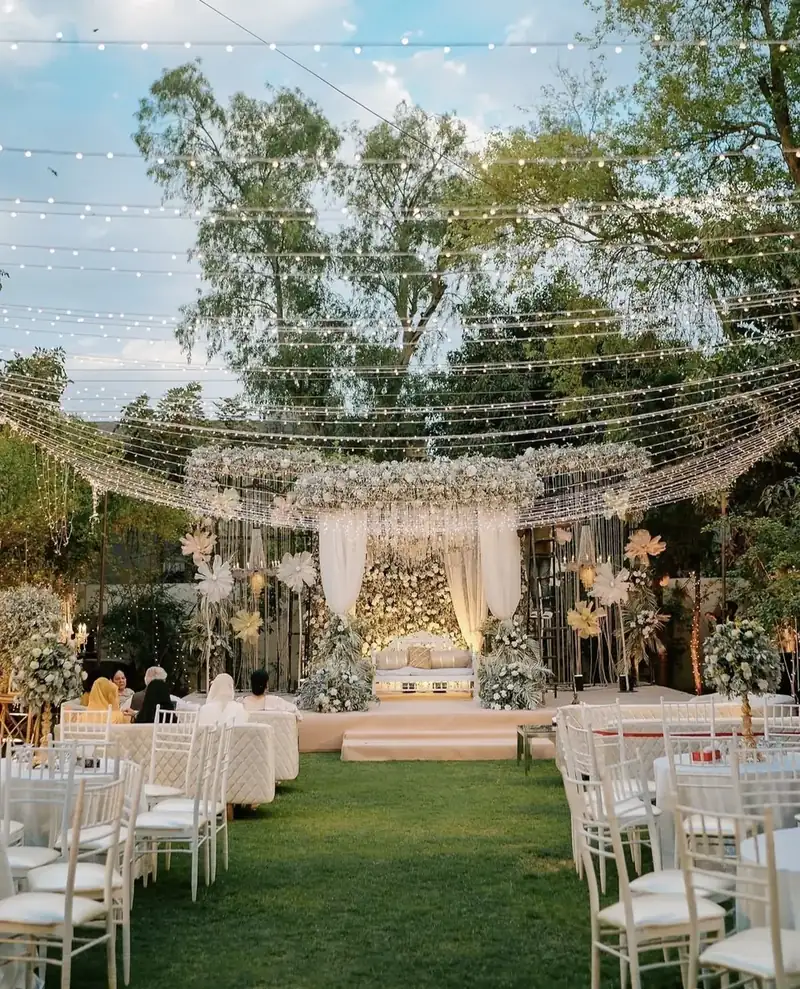
Planning a Haryanvi wedding at a farmhouse in Delhi NCR? Gurgaon, Faridabad, Sonipat, Bahadurgarh and Palwal are all in Haryana, and many of Delhi's own villages, from Najafgarh to Narela, have deep Haryanvi and Jat roots. Families that once held the whole wedding in the village chaupal or the home courtyard now often keep the bann at home and book a farmhouse for the bhaat, baraat and pheras. This guide maps each Haryanvi ritual to a farmhouse slot and covers 2026–27 dates, the new community rules on DJs, liquor and guest numbers, a two-day plan, the desi menu, cost estimates and a checklist.
Quick answer
For a Haryanvi or Jat wedding in Delhi NCR, keep the sagai, bann and jakdi nights at home and book a farmhouse for two days: mehendi and the bhaat on day one, then the baraat, dwar rokai, jaimala and pheras on day two, with vidaai the next morning. Budget roughly ₹8–18 lakh for 300 guests, and finish the baraat and DJ by 10 PM.
Haryanvi Wedding at a Farmhouse: At a Glance
| Item | What to plan for |
|---|---|
| Booking length | 2 days plus 1 night for most families; 1 day if mehendi and bhaat stay at home |
| Functions at the farmhouse | Mehendi, bhaat, a last jakdi evening, baraat, dwar puja and dwar rokai, jaimala, dinner, gotra puja, kanyadaan, pheras, vidaai |
| Usually at home | Sagai, bhaat nyotna, bann with tael chadhana and batna, most jakdi nights, griha pravesh, munh dikhai, pag phera |
| Dates this season | Early December 2026, then 15 January to February 2027 |
| Must-have spaces | A wide gate for the mare and dwar rokai, a covered mandap with a safe havan spot, floor seating for women's songs, a kitchen for a desi caterer, heated rooms |
| Rules to plan around | Outdoor music off by 10 PM, no firecrackers in Delhi-NCR, no celebratory firing, a liquor permit if there is a bar |
| Cost (estimate) | About ₹8–18 lakh for a 300-guest wedding day |
What Are the Rituals of a Haryanvi Wedding, in Order?
A Haryanvi wedding runs from the sagai and the bhaat invitation to the bann, jakdi nights and bhaat, then the baraat, dwar rokai, kanyadaan and pheras, and ends with the vidaai. The order below draws on Sahapedia's essay on Jat Haryanvi marriage rituals and songs, Aza Fashions' 2026 Haryana wedding guide and Pernia's Haryana wedding encyclopedia. The three disagree in places, and Sahapedia itself stresses that songs and customs change from village to village, so use this as a planning map and let your elders and priest settle the details.
| Ritual | What happens | Farmhouse slot |
|---|---|---|
| Sagai and misri | Families agree the match; jewellery or a ring, sweets and misri are exchanged; Jat families often exchange shawls between elders | Weeks earlier; home or a farmhouse lunch |
| Bhaat nyotna | The mother invites her brother's family to bring the bhaat | About 10 days before; at the maternal home |
| Bann and tael chadhana | Oil, henna, curd and turmeric applied with grass, feet to head, while women sing; relatives host dinners each evening | About 5 days before; at home |
| Batna (ubtan) | Barley flour, turmeric and mustard oil paste applied by the women | Daily during bann, or one haldi morning on the farmhouse lawn |
| Jakdi and women's songs | Neighbourhood women sing and dance late into the night | Nights at home; a final evening at the farmhouse ending by 10 PM outdoors |
| Mehendi | Women-only evening for the bride; folk songs | Day 1 evening at the farmhouse |
| Bhaat (mayra) | The maternal uncle's family arrives with clothes, jewellery and shagun and is welcomed by the sister | Day 1 afternoon or wedding-day lunch |
| Ratjaga | Family stays up singing and telling folk tales on the last night | Indoor hall after 10 PM, without speakers |
| Baraat (ghudchadi) | Groom rides a decorated mare, led by dhol or a brass band | Wedding day, arriving 6–7 PM |
| Dwar puja and dwar rokai | Bride's mother does aarti and tilak; her brothers block the gate for neg | At the main gate |
| Jaimala | Garland exchange, with cousins lifting the couple | On the lawn stage, before dinner |
| Gotra puja and kanyadaan | Priest confirms both gotras; father gives the bride away with the mama beside him | In the covered mandap at the muhurat |
| Saat phere and sindoor | Seven rounds of the fire with vows, then sindoor | In the mandap, heaters on |
| Patda pherna | Bride turns over a low wooden stool to mark her new role | In the mandap after the pheras |
| Vidaai | Bride throws rice behind her and leaves; women sing farewell songs | Next morning, before checkout |
| Griha pravesh, munh dikhai, pag phera | Welcome at the groom's home, elders unveil and bless the bride, first return visit | At home after the wedding |
How Many Days Is a Haryanvi Wedding?
Traditionally, the wedding takes over the family for well over a week. Sahapedia describes the bhaat invitation going out about ten days before and a five-day bann at home, when relatives host the family for dinner each evening. Pernia instead lists a shorter ban baithana with banori and ratjaga on the last day, and gives pag phera as the day after the wedding, where Aza says three to seven days after. In practice, most Delhi NCR families now do the bann at home and book the farmhouse for the last one or two days, when the guest list jumps from close family to the whole biradari.
Where Does the Bhaat Fit at a Farmhouse?
The bhaat, when the mother's brother and his family arrive with clothes, jewellery and shagun, is one of the most emotional moments of a Haryanvi wedding, with its own songs about the brother and sister. At a farmhouse it works best as a daytime function on day one or a lunch on the wedding day: set a welcome spot near the entrance for the sister's tilak and aarti, and a display table for the gifts. Our bhaat (mayra) ceremony guide covers the invitation, the gift list and costs in detail.
Are DJs, Liquor and Late-Night Pheras Being Banned at Haryanvi Weddings?
There is no state-wide ban on DJs or liquor at weddings, but several caste and village panchayats in Haryana have passed their own wedding rules, and the latest one came this month. These are community resolutions, not laws, and they apply only to the villages or communities that adopted them, but many families follow them, so ask both sides early.
| Who and when | What they asked for |
|---|---|
| Phogat khap, Dadri (Swarajya, Jan 2020) | No liquor, no DJ after 10 PM, no celebratory firing; weddings to be completed by 10 PM |
| Sarv Jatiya Athgama khap, Charkhi Dadri (ThePrint, Dec 2024) | Celebratory firing banned after a 13-year-old girl was killed during a baraat; fine, police report and social boycott for offenders |
| Gurjar mahapanchayat, Rewari (Tribune, Mar 2025) | No DJ and no liquor at weddings |
| Vaishya Agrawal mahapanchayat, Palwal (ThePrint, Nov 2026) | No DJ, no liquor stalls, 300–400 guests, 21–31 dishes, digital invites and day-time pheras |
Sources: Swarajya, ThePrint (Charkhi Dadri), The Tribune and ThePrint (Palwal, 3 November 2026). The Palwal meeting was attended by families from Faridabad, Gurugram and Delhi, and its push for day-time pheras matches a wider trend; our day wedding at a farmhouse guide lists the fully daytime muhurats this season. Whatever your community decides, a farmhouse makes a "dry" or DJ-free wedding easy: dhol, a folk singer or a ragni group can carry the baraat and the evening without a sound system.
When Are the Haryanvi Wedding Dates in 2026–27?
Haryanvi families fix the date with their own pandit, so general lists are only a starting point. Most Hindu calendars give two windows this winter: early December 2026, and mid-January to February 2027. Between them sits Kharmas, which Hindupad gives as about 16 December to 14 January, when weddings are usually avoided.
| Month | Listed dates | Weekend dates |
|---|---|---|
| December 2026 | 2, 3, 4, 5, 6, 11, 12 Dec | Sat 5, Sun 6, Sat 12 Dec |
| January 2027 | 15, 18, 19, 20, 24, 26, 27, 30, 31 Jan | Sun 24, Sat 30, Sun 31 Jan |
| February 2027 | 2, 3, 9, 10, 11, 14, 15, 21, 22, 25, 26, 27, 28 Feb | Sun 14, Sun 21, Sat 27, Sun 28 Feb |
These are VedicFeed's New Delhi lists for December 2026, January 2027 and February 2027. Confirm your date with your pandit before you pay a farmhouse advance. Weekend dates in late January and February fill first in Gurgaon, Faridabad and on Sohna Road, so families aiming for those should be shortlisting now.
What Does a Two-Day Haryanvi Wedding at a Farmhouse Look Like?
This sample plan assumes a winter wedding with an early-evening baraat and pheras soon after dinner. Shift it if your pandit gives a different muhurat, or move the pheras into the afternoon for a day wedding.
- Day 1, 10 AM: check-in; décor team sets the mehendi area and starts the mandap and gate.
- Day 1, 12–3 PM: bhaat: the mama's family arrives, tilak and aarti at the entrance, gifts displayed, then a desi lunch.
- Day 1, 3–6 PM: mehendi on a sunny lawn with women's songs and dholak.
- Day 1, 7–9:45 PM: a last jakdi and family dance evening; amplified music ends by 10 PM.
- Day 1, after 10 PM: ratjaga indoors with songs and stories, no speakers.
- Day 2, morning: rest, ghara puja or batna if your family keeps it, final décor.
- Day 2, 6–7 PM: baraat arrives with dhol and the groom on the mare; dwar puja and dwar rokai at the gate.
- Day 2, 7–9:45 PM: jaimala, photos and dinner; band and DJ finish before 10 PM.
- Day 2, 10 PM onwards: gotra puja, kanyadaan, saat phere, sindoor and patda pherna in the covered mandap with heaters on.
- Day 3, 8–10 AM: breakfast, vidaai and checkout.
What Food Is Served at a Haryanvi Wedding?
A Haryanvi wedding menu is hearty, ghee-rich and mostly vegetarian. Aza's guide lists kadhi pakora, bajra khichdi, sarson ka saag with makki ki roti, aloo puri, churma, halwa and kheer, with lassi to welcome guests, and notes that village weddings are often served in a seated pangat. Most Delhi NCR caterers can cook these, but book a tasting, and check that the farmhouse allows an outside halwai if you have a trusted one from your village.
- Bhaat lunch: kadhi pakora, aloo puri, bajra khichdi with ghee and shakkar, and kheer.
- Mehendi and jakdi evening: chai, pakode and a hot jalebi or gulgule counter for the cold.
- Wedding dinner: a regular North Indian spread with a desi corner: sarson ka saag, makki ki roti with white butter, churma and halwa.
- Welcome drink: lassi or hot milk with jaggery on a cold night.
- Pangat option: floor or low-table seating for elders, served by family members, alongside the buffet.
How Much Does a Haryanvi Wedding at a Farmhouse Cost in Delhi NCR?
A 300-guest Haryanvi wedding day at a Delhi NCR farmhouse often costs about ₹8–18 lakh as a rough late-2026 estimate. Haryanvi guest lists tend to be large because the whole extended family and village are invited. The figures below are our planning estimates, not quotes; your final cost depends on the date, area, guest count and menu.
| Item | Typical range (estimate) | Notes |
|---|---|---|
| Farmhouse rent (per day) | ₹1.5–5 lakh | Higher on Saturdays in December and February |
| Catering (per plate) | ₹900–2,200 | Desi or pangat counters can cost less than a multi-cuisine buffet |
| Mandap, stage and décor | ₹80,000–3.5 lakh | Mandap, jaimala stage, entry gate for dwar rokai |
| Mehendi and bhaat setup | ₹30,000–1 lakh | Seating, floor mattresses for women's songs, marigold backdrop |
| Dhol, band and mare | ₹25,000–1 lakh | Depends on band size, hours and the ghodi |
| DJ and sound | ₹30,000–1 lakh | Must finish outdoors by 10 PM |
| Photography and video | ₹1–3 lakh | Two days of coverage |
| Priest and samagri | ₹11,000–41,000 | Both families' pujas |
| Heaters and lighting | ₹30,000–1.5 lakh | Patio heaters, warm lighting, power backup |
| Guests | Wedding day (estimate) | Add a mehendi and bhaat day (estimate) |
|---|---|---|
| 150 guests | ₹5–10 lakh | ₹1.5–3 lakh |
| 300 guests | ₹8–18 lakh | ₹2–5 lakh |
| 500 guests | ₹13–28 lakh | ₹3–7 lakh |
Not included above: outfits, jewellery, the bhaat gifts, shagun, a bar and rooms for relatives from the village. If you plan a bar, Delhi farmhouses need a P-10 permit, which the Delhi Excise notice dated 22 October 2026 sets at ₹15,000 per event, while Gurgaon, Faridabad and Sonipat farmhouses follow Haryana's own permit (ask the owner and the district excise office). Our farmhouse wedding cost guide breaks down per-plate and rent quotes in more detail.
Which Rules Apply to a Farmhouse Wedding in Delhi NCR This Winter?
- Music by 10 PM: under the Noise Pollution Rules, loudspeakers outdoors are not allowed between 10 PM and 6 AM. India TV's April 2025 report says Delhi Police also need prior permission for loudspeakers, and Haryana districts have issued their own orders, such as Sirsa's October 2023 ban on DJs from 10 PM to 6 AM at wedding venues.
- No celebratory firing: firing in the air at a baraat is a criminal offence under the Arms Act, and it has killed guests, including the Charkhi Dadri case above. Tell both families and the farmhouse manager that no weapons are allowed at the venue.
- No firecrackers: the Supreme Court restored the firecracker ban in Delhi-NCR from 9 November 2026, which covers Gurgaon, Faridabad and Sonipat too.
- Bad-air days: diesel generators, coal tandoors and open burning can be restricted under GRAP. Ask the caterer to cook on gas and the farmhouse for grid power. Our GRAP rules guide explains each stage.
- Gifts, not dowry: bhaat and other gifts should be voluntary. Demanding dowry is an offence under the Dowry Prohibition Act, 1961.
What Should You Ask the Farmhouse Before Booking?
- Is the gate and driveway wide enough for a mare, a band and the dwar rokai crowd?
- Is a havan fire allowed in the mandap, and is the mandap covered for a foggy night?
- Are outside halwais allowed, and is there a kitchen or cooking space for a desi menu and pangat service?
- Is there an indoor hall where women can sing after 10 PM without disturbing neighbours?
- Does the owner have a written no-weapons, no-firing rule, and who handles security at the gate?
- How many heated rooms are there, and can both families stay overnight?
- Is there an overtime charge if the pheras run past midnight, and what is the checkout time after the vidaai?
Haryanvi Wedding Checklist for a Farmhouse
- 8–10 weeks before: fix the date with your pandit, agree guest numbers and any community rules (DJ, bar, day pheras) with the other family, and book the farmhouse.
- 6–8 weeks before: book the caterer with a tasting, dhol and band, the mare, décor, photographer and mehendi artist.
- 4 weeks before: sagai if not done; send invitations; book rooms for village relatives.
- About 10 days before: bhaat nyotna to the maternal uncle's family.
- About 5 days before: bann begins at home with tael chadhana; plan which relatives host each dinner.
- 2 weeks to 1 week before: confirm the menu per function, loudspeaker permission, any bar permit and the no-firing rule with security.
- After: griha pravesh and munh dikhai at the groom's home, then register the marriage.
Effortless Events is a Delhi NCR event planning and venue discovery company that helps families book farmhouses, villas and venues for weddings and functions such as the bhaat, baraat and reception. Our baraat at a farmhouse guide helps with band timing, the mare and the route, and our Bahadurgarh farmhouse guide compares venues on the Rohtak Road side for families from Jhajjar and Rohtak.