
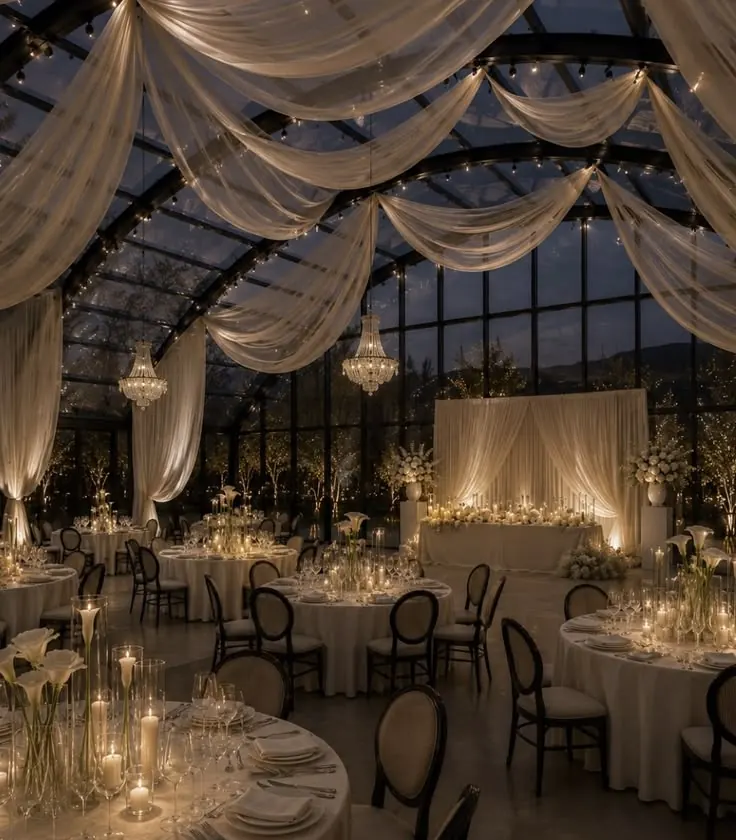
Planning a Gujarati wedding at a farmhouse in Delhi NCR? The lagna calendar is tight this winter: dates pause for Kamurta from mid December to mid January, then pick up again from 15 January 2027. A Gujarati wedding is also more than one evening. There is a garba night, pithi and mameru, then the wedding with four mangal fera. A farmhouse can host all of it in one place. This guide covers dates, rituals by day, a garba plan that works with Delhi's noise rules, the menu, cost estimates and a checklist.
Quick answer
For a Gujarati wedding in Delhi NCR, book a farmhouse for two or three days: mehndi and garba, pithi and mameru, then the wedding. 2027 Gujarati lists start on 15 January, after Kamurta (about 16 December to 14 January). Start garba early so amplified music ends by 10 PM, and budget roughly ₹9–20 lakh for 250 guests.
Gujarati Wedding at a Farmhouse: At a Glance
| Item | What to plan for |
|---|---|
| Booking length | 2–3 days at the venue; add an overnight stay if the pheras run late or vidaai is next morning |
| Functions at the farmhouse | Mehndi, garba or sangeet, pithi, mameru, jaan and ponkhvu, mangal fera, reception dinner |
| Dates this season | Early December 2026 (check with your pandit), then 15 January to mid-March 2027 |
| Food | Fully vegetarian Gujarati menu; many families also keep the event alcohol-free |
| Must-have spaces | A large dance floor for garba, covered mandap with a safe fire spot, rooms for both families, a kitchen |
| Cost (estimate) | About ₹9–20 lakh for a 250-guest wedding day |
What Are the Gujarati Wedding Dates for 2026–27?
The Gujarati wedding season this winter has two windows: a short one in early December 2026 and a longer one from mid-January to mid-March 2027. In between, Gujarati families generally pause weddings for Dhanarak Kamurta, the month when the Sun is in Sagittarius. In its December 2025 report, DeshGujarat described this break as running from mid-December to Makar Sankranti on 14 January. The North Indian equivalent, Kharmas, is given by Hindupad as about 16 December to 14 January.
| Month | Listed dates | Weekend dates |
|---|---|---|
| December 2026 | General list: 2–6, 11, 12 Dec (not a Gujarati list) | Sat 5, Sun 6, Sat 12 Dec |
| January 2027 | 15, 18, 19, 20, 24, 26, 27, 30, 31 Jan | Sun 24, Sat 30, Sun 31 Jan |
| February 2027 | 2, 3, 9, 10, 11, 14, 15, 21, 22, 25, 26, 27 Feb | Sun 14, Sun 21, Sat 27 Feb |
| March 2027 | 1, 2, 3, 4, 9, 10, 14 Mar | Sun 14 Mar |
The 2027 dates come from WedMeGood's Gujarati wedding dates for 2027, which also advises avoiding Holashtak (15–22 March 2027). We could not find a reliable Gujarati list for December 2026. The December dates above are the general North Indian list from VedicFeed, so check them with a Gujarati pandit. Gujarati muhurats follow the Vikram Samvat panchang and can differ from other lists.
- Weekend dates go first. Only a few 2027 dates fall on a Saturday or Sunday, so popular farmhouses for Sat 30 January and Sat 27 February book early.
- Weekday muhurat, weekend party. If your date is a Tuesday or Wednesday, keep the pheras small and hold the garba night and reception at the farmhouse on the weekend before.
- NRI guests: the same DeshGujarat report notes a surge in NRI weddings in late December, when families travel home. In Delhi NCR this overlaps with Kamurta, so most families with overseas guests aim for mid-to-late January.
What Are the Rituals of a Gujarati Wedding, Day by Day?
A Gujarati wedding moves from home rituals to venue functions to the wedding itself. The table below is based on the ritual guides from WeddingWire (updated September 2025), CulturalIndia and Aza Fashions, mapped to where each one usually happens.
| Ritual | What happens | When and where |
|---|---|---|
| Chandlo matli | The match is fixed with a tilak and token money between the two fathers | Weeks or months before, at home |
| Gol dhana | Engagement: jaggery and coriander seeds, rings and blessings | Before the wedding; home or a small venue |
| Ganesh sthapana, mandap mahurat, griha shanti | Ganesh puja, blessing of the mandap site and a puja for the planets | A few days before; mandap mahurat can be done at the farmhouse |
| Mehndi | Henna for the bride, with songs | About two days before; farmhouse day 1 |
| Garba / sangeet (sanji) | Families dance garba and dandiya raas and sing wedding songs | One or two evenings before; farmhouse day 1 evening |
| Pithi | Turmeric and sandalwood paste applied to bride and groom, separately | Day before; farmhouse day 2 morning |
| Mameru | The bride's mama brings the panetar saree, chura, jewellery and sweets | Day before; farmhouse day 2 |
| Varghodo / jaan, ponkhvu | The groom's procession arrives; the bride's mother welcomes him with aarti and the playful nose tug | Wedding day, at the farmhouse gate |
| Jaimala, madhuparka, antarpaat | Garlands, the groom's feet washed and panchamrut offered, a cloth held between the couple | Wedding day, at the mandap |
| Kanyadaan, hasta milap | The bride's father gives her hand; the couple's hands or garments are tied | Wedding day, at the mandap |
| Mangal fera, saptapadi | Four rounds of the fire, then seven steps and vows | At the muhurat time |
| Sindoor daan, mangalsutra, kansar | Sindoor and mangalsutra; the couple feed each other sweets | Straight after the pheras |
| Vidaai, griha pravesh, aeki beki | Farewell, the bride's welcome home and the ring-finding game | After the wedding; groom's home |
The sources differ on some details. Aza's main text calls the fire rounds “saat phere”, but its own FAQ and the other two guides describe four mangal fera. Sources also differ on who visits whom for gol dhana, and on whether the sangeet is one or two nights before. Follow your family's custom and confirm the order with your pandit.
Why Choose a Farmhouse for a Gujarati Wedding?
A farmhouse fits a Gujarati wedding because it combines a big dance floor, a mandap with a safe fire, and rooms for the family in one place. You also get time across two or three days. A banquet hall usually rents one evening slot with an in-house kitchen.
- Space for garba circles: garba needs a large open floor where several rings can turn at once. A lawn with a flat wooden or carpeted floor works better than a banquet floor packed with tables.
- Your own Gujarati caterer: many farmhouses allow outside caterers, so you can bring a cook who knows undhiyu and farsan, not a general North Indian buffet.
- Daylight lawn for pithi and mameru: the morning rituals photograph best in winter sun on an open lawn.
- Rooms for both families: useful for changing between functions and for elders who should not drive home late in winter fog.
If your family is still deciding between a full wedding and a smaller ceremony, our guide to an intimate farmhouse wedding in Delhi NCR covers formats for 50–150 guests.
How Do You Plan a Garba Night at a Delhi NCR Farmhouse?
Start the garba night early, around 6:30 to 7 PM, so amplified music can end by 10 PM. Garba nights often run late, but loudspeakers in Delhi need prior police permission and must stop by 10 PM, according to India TV's April 2025 report on Delhi Police rules, with fines for violations. Farmhouses in Gurgaon, Faridabad and Noida follow the same 10 PM limit under national noise rules.
- 6:30 PM: guests arrive; welcome drinks and light farsan such as dhokla, khandvi and fafda.
- 7:00 PM: Ganesh aarti or a short opening song, then the first slow garba rounds for elders.
- 7:30–9:00 PM: faster garba and dandiya raas with a live singer and dhol, or a DJ with a garba playlist.
- 9:00 PM: dinner opens. Short performances by family members while guests eat.
- 9:30–10:00 PM: final garba round. Amplified music ends at 10 PM.
- After 10 PM: quiet antakshari or unplugged songs indoors, if the venue allows.
Ask the décor team for a raised or carpeted floor so dancers do not slip on dewy grass, warm lighting around the circle and patio heaters at the edges, not in the dance area. Keep dandiya sticks in baskets at the entrance. For more ideas on music, stage and running order, see our sangeet night farmhouse guide.
What Food Is Served at a Gujarati Wedding?
A Gujarati wedding menu is fully vegetarian, with farsan, sweet and sour dishes, and plenty of desserts. Dishes named in Aza's Gujarati wedding guide include undhiyu, dal dhokli, sev tameta nu shaak, kadhi with pakoras, puri and bhakri, shrikhand, mohanthal, lapsi, churma ladoo, and fafda with jalebi. Undhiyu is made with winter vegetables, so a December to February wedding is the right season for it.
| Function | Menu idea |
|---|---|
| Mehndi lunch | Dhokla, khandvi, thepla, chaat, chaas, simple sweets |
| Garba night | Live fafda-jalebi, pav bhaji, dabeli, hot soup, masala chai |
| Pithi and mameru | Light Gujarati lunch: dal-bhaat, kadhi, rotli, shaak |
| Wedding dinner | Undhiyu, puri, dal dhokli, kadhi, rice, shrikhand, mohanthal, plus a North Indian counter for Delhi guests |
Some families want a separate counter for elders who avoid onion, garlic or root vegetables. Our Jain wedding farmhouse guide has a short list of food rules to give the caterer for that counter. Many Gujarati families keep the wedding alcohol-free. If you plan a separate cocktail evening at a Delhi farmhouse, it needs its own liquor licence.
How Much Does a Gujarati Wedding at a Farmhouse Cost in Delhi NCR?
As a rough planning estimate for late 2026, a 250-guest Gujarati wedding day at a Delhi NCR farmhouse costs about ₹9–20 lakh, before clothes, jewellery and the mameru. The figures below are our estimates from typical Delhi NCR vendor ranges, not quotes. Prices depend on the area, the date, the guest count and the vendors you choose.
| Item | Typical range (estimate) |
|---|---|
| Farmhouse rent, wedding day | ₹2–6 lakh, by area, date and size |
| Extra function day (mehndi and garba) | ₹1–3 lakh |
| Vegetarian Gujarati catering | ₹1,000–₹2,500 per plate |
| Mandap and décor | ₹2–5 lakh |
| Garba singer and dhol, or DJ and sound | ₹50,000–₹2 lakh |
| Pandit and puja samagri | ₹15,000–₹50,000 |
| Lighting, heaters and power backup | ₹50,000–₹1.5 lakh |
| Photography and video | ₹1.5–4 lakh |
| Mehndi artist | ₹15,000–₹60,000 |
| Guest count | Wedding day (estimate) | Mehndi and garba day (estimate) |
|---|---|---|
| 100 guests | ₹5–10 lakh | ₹2–4 lakh |
| 250 guests | ₹9–20 lakh | ₹4–8 lakh |
| 400 guests | ₹14–30 lakh | ₹5–12 lakh |
A dry, vegetarian menu usually keeps the per-head cost lower than a wedding with a full bar. For a detailed breakdown of venue, catering and décor costs, see our farmhouse wedding cost guide for Delhi NCR.
What Does a Three-Day Gujarati Wedding at a Farmhouse Look Like?
Here is a sample plan for a Saturday 30 January 2027 wedding. Your pandit's muhurat may move the pheras earlier or later.
| Day | Morning / afternoon | Evening |
|---|---|---|
| Thu 28 Jan | Mandap mahurat and griha shanti; mehndi from 1 PM | Garba night, 6:30–10 PM |
| Fri 29 Jan | Pithi for the bride (the groom's at his home), then mameru and lunch | Quiet family dinner; rest |
| Sat 30 Jan | Bride gets ready; mandap décor finishes | Jaan and ponkhvu, jaimala, mangal fera at the muhurat, dinner, vidaai |
If the groom arrives with a band, keep the procession inside the farmhouse grounds and end loud music by 10 PM. Our baraat at a farmhouse wedding guide covers routes, timing and band costs.
Which Rules Apply to a Farmhouse Wedding in Delhi NCR This Winter?
- Music by 10 PM: plan garba and the jaan so the amplified part ends on time, and get loudspeaker permission in advance.
- No firecrackers: the Supreme Court restored the firecracker ban in Delhi-NCR from 9 November 2026; use cold pyro only if the venue allows it.
- GRAP days: on high-pollution days, diesel generators and open coal tandoors can be restricted. Ask the farmhouse for grid power or an approved backup. Our GRAP rules guide explains each stage.
- Havan fire: keep the mandap fire small, with sand, water and an extinguisher nearby, and away from fabric drapes.
What Should You Check Before Booking a Farmhouse?
Effortless Events is a Delhi NCR event planning and venue discovery company that helps families book farmhouses, villas and venues for weddings, receptions and family functions, and coordinate catering, décor and logistics. Families in south and west Delhi often look at Chattarpur and Bijwasan, Gurgaon families towards Sohna Road, and Noida families along the Expressway. Whatever the area, check:
- Booking covers every function day, with check-in, check-out and any overnight stay in writing.
- Floor space for garba: a flat area large enough for several rings, separate from the dinner tables.
- Outside caterer allowed, with a kitchen they can use from early morning.
- A covered mandap with written permission for the havan fire.
- Rooms with heaters for the bride's family and elders, close to the mandap.
- A gate or walkway for the jaan and ponkhvu, and parking for both sides.
- Music finish time and who applies for loudspeaker permission.
- A power plan that does not rely on diesel generators.
Gujarati Wedding Checklist for a Farmhouse
- 8–10 weeks before: fix the muhurat with your pandit; book the farmhouse for all function days.
- 6–8 weeks before: book the Gujarati caterer, décor, garba singer or DJ, photographer and mehndi artist.
- 4 weeks before: send invitations; plan the mameru with the bride's maternal family; book rooms for outstation guests.
- 2 weeks before: confirm the menu for each function, loudspeaker permission and the music cut-off.
- Wedding week: collect puja samagri, dandiya sticks and the panetar; walk the site with the décor team and caterer.
- After: griha pravesh and aeki beki at home, then register the marriage.
Effortless Events can shortlist farmhouses with room for garba, outside Gujarati caterers and a havan fire, and plan the schedule so the loud functions finish before 10 PM.